Factory Direct Pricing | Australian Support | Verified Manufacturers
Categories
Blog Uncategorized

Teardrop, Mini Caravan, Hybrid or Off-Road? Which Caravan Type Is Right for You

Before you compare brands or floorplans, get the type right. It’s the single decision that shapes everything else — what you can tow, where you can go, how long you can stay out, and what you’ll pay. Pick the wrong category and even a great van will feel like a compromise.

Here’s a plain guide to the main types we import, and how to land on the one that fits you.

The five types, quickly

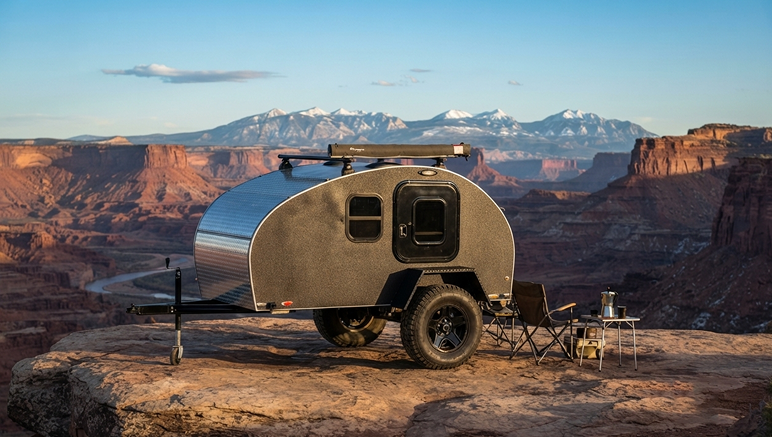
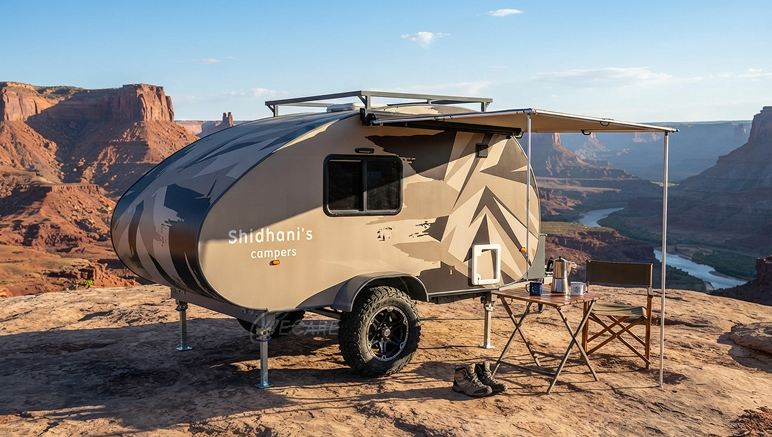
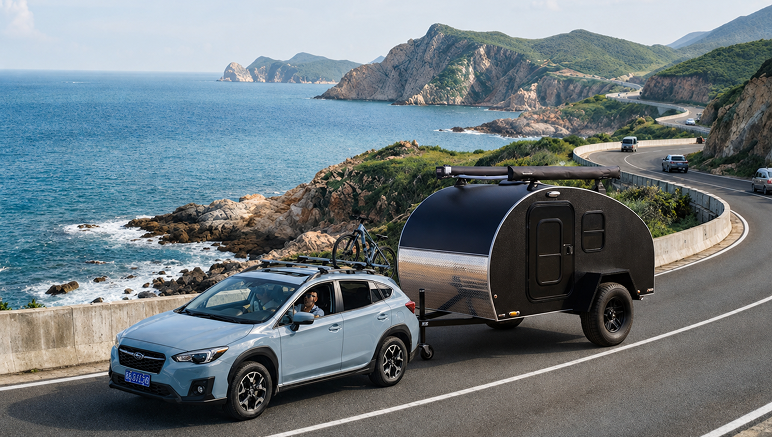
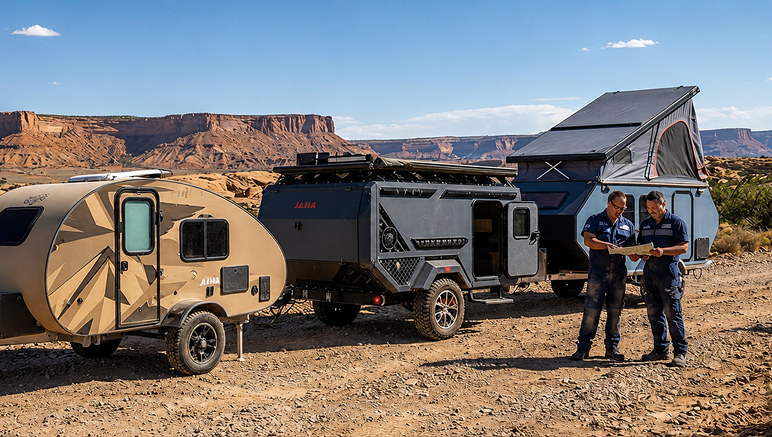
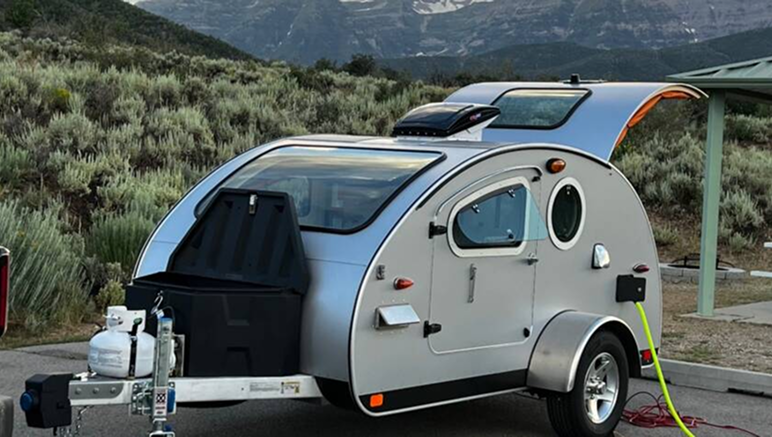
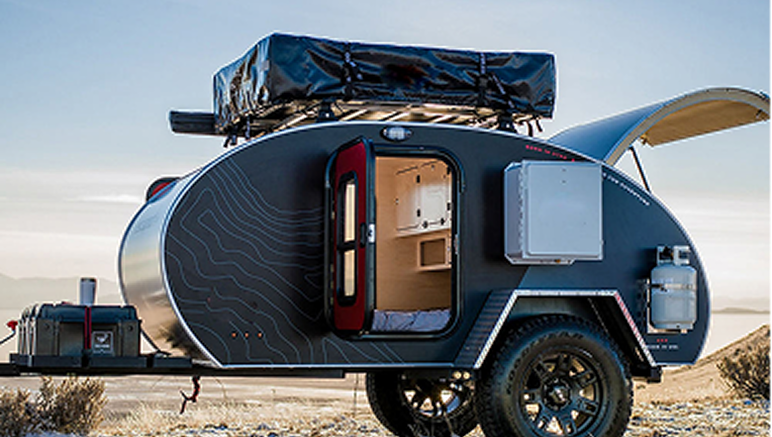
Teardrop camper — the smallest and lightest option. A cosy sleeping cabin for two, usually with an outdoor kitchen in the rear hatch. It tows behind almost anything, sets up in minutes and stores in a normal garage. Best for couples doing weekends and short trips who are happy to camp outside the van. Trade-off: no standing room inside, and bathrooms are limited (some include a compact shower).

Mini / compact caravan — a small hard-walled van with an internal bed, a kitchenette and often a little bathroom. You get caravan comforts — sleep inside, out of the weather — in a package light enough for a mid-size SUV or 4WD. Ideal for couples who want comfort without a big rig.

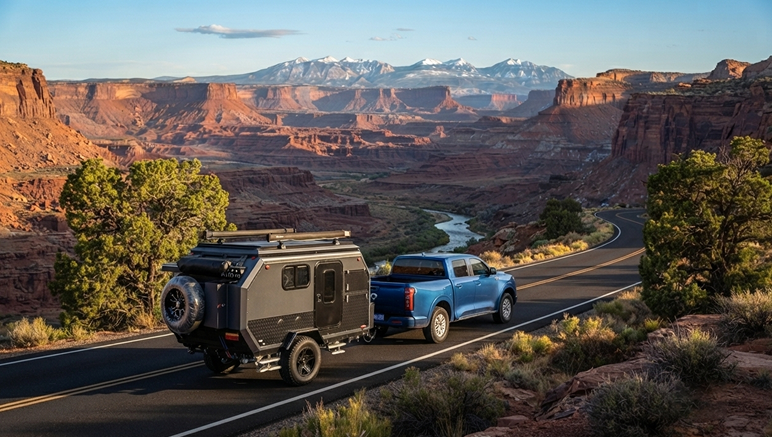
Off-road camper trailer — built to go where caravans can’t. Rugged chassis, serious clearance, and a fold-out or rooftop tent setup. Lighter and more agile than a full van, so it’s the choice for remote tracks and proper 4WD touring. Trade-off: more setup at camp, and you’re sleeping in a soft-sided area.

Hybrid — the in-betweener, and increasingly the sweet spot. It blends a camper trailer’s toughness and compact size with a caravan’s hard walls, internal bed and (often) an ensuite. Great for couples who want to free-camp off-grid in remote country but still sleep inside and set up fast.

Full off-road caravan — the most self-contained option: room to move, full kitchen and bathroom, big water and power, space for a family. Perfect for long trips and the Big Lap — provided you have a genuinely capable tow vehicle to match (more on that below).

How to choose: five honest questions

  1. Who’s travelling? Just the two of you opens up teardrops, mini vans and hybrids. Travelling with kids points you toward a family-sized off-road caravan with bunks.
  2. Where will you actually go? Mostly bitumen and powered sites? A mini or full caravan is comfortable and easy. Chasing remote, corrugated tracks? Lean off-road camper trailer or hybrid.
  3. How long are your trips? Weekends and the odd week suit smaller, quicker-to-set-up rigs. Months on the road reward the space, water and power of a hybrid or full van.
  4. What can your vehicle tow — really? This is where most plans come unstuck. A hatchback or small SUV handles a teardrop; a mid-size 4WD suits a mini van or camper trailer; a full off-road family van needs a large 4WD with the payload to match, not just a big towing number. (Our caravan towing weights guide walks through exactly how to check.)
  5. What’s your setup tolerance? Some people happily pitch an awning and rooftop tent; others want to pull up, level, and be inside with the kettle on in five minutes. Be honest — it changes the answer.

A quick matcher

  • Couple, weekends, any car, minimal fuss → Teardrop camper
  • Couple, comfort, mid-size SUV/4WD, mostly sealed roads → Mini / compact caravan
  • Couple or small group, remote 4WD tracks, lightweight → Off-road camper trailer
  • Couple, off-grid touring, want to sleep inside and set up fast → Hybrid
  • Family, long trips, fully self-contained, capable tow vehicle → Full off-road caravan

Still not sure?

That’s normal — most people sit between two types, and the right call comes down to your specific vehicle and travel plans. Tell us how you camp, where you want to go and what you’ll tow with, and we’ll shortlist the layouts that actually fit. No upsell to a bigger van than you need.
Categories
Blog Uncategorized

Importing a Caravan from China to Australia: How It Actually Works (2026)

Buying a caravan factory-direct from China is appealing for obvious reasons — you get a higher spec for the money and far more say over the build. The part that catches people out isn’t the van. It’s everything between the factory floor and your driveway: approvals, compliance, quarantine, customs and state registration.

Here’s the real process in plain English, so you know what you’re taking on — and where the genuine risks sit.

First, the big change: the RVSA

Since 1 July 2023, every road vehicle supplied to the Australian market for the first time falls under the Road Vehicle Standards Act 2018 (RVSA), which replaced the old Motor Vehicle Standards Act. A caravan is treated as a trailer under these rules, and the days of quietly self-certifying an imported trailer are over.

The headline for buyers: an imported caravan generally can’t be registered until it has been approved and listed on the Register of Approved Vehicles (RAV) — think of the RAV as a digital compliance plate the government (and your state) can look up.

Step by step

1. Confirm it can meet the Australian Design Rules (ADRs). The ADRs are national safety standards. For a caravan, the relevant ones cover things like the drawbar, couplings, brakes, reflectors, lighting and tyres. A van built only for the Chinese domestic market won’t automatically meet them — the build has to be specified correctly before it’s made.

2. Get an import approval through ROVER. ROVER is the federal Road Vehicle Regulator’s online portal. There are two pathways that matter for caravans (which are “low ATM trailers” — 4.5 tonnes ATM or less):

  • Vehicle Type Approval (VTA): required for a business importing more than four identical trailers in a 12-month period. It demands evidence of design control and a quality system.
  • Concessional RAV Entry (CRE): the common pathway for an individual or anyone bringing in four or fewer units. Simpler, no quality-management system required, and it issues a VIN.

3. Sort the VIN. Australian manufacturers can generate their own VINs. Importers can’t — the VIN must be supplied from the country of origin and then marked on the compliance plate (it’s wise to stamp it into the drawbar too).

4. Get it onto the RAV. Once approval is granted, the van’s details are entered on the RAV. Until that’s done, your state authority generally won’t register it.

5. Shipping and customs. The van travels by ocean freight, then clears the Australian Border Force. Expect import duty (commonly around 5%) plus 10% GST, both calculated on the value — budget for these from day one, because they’re the costs people forget.

6. Biosecurity (this one bites). The Department of Agriculture, Fisheries and Forestry inspects imported goods for contamination. The van must be steam-cleaned inside and out with no soil, plant matter or pests, and Australia has a zero-tolerance approach to asbestos — testing (and removal, if anything is found) can be required. Always check the BICON database for the specific conditions.

7. Gas and electrical compliance. A caravan sold here needs Australian plugs and fittings and, where gas is fitted, a gas compliance certificate. This has to be designed in, not bodged on arrival.

8. State or territory registration. This is the step most people misunderstand: federal import approval does not equal registration. Each state and territory (VicRoads, Transport for NSW, and so on) runs its own process, and you’ll deal with them directly to get plates.

Where it goes wrong

The unmanaged imports that end badly usually share the same failures: a van specced for the wrong market that won’t pass ADRs, no pre-shipment inspection (so faults are discovered after it lands), surprise asbestos or quarantine holds, duties and GST the buyer didn’t budget for, and no support when something needs fixing 12 months later.

None of these are reasons not to import. They’re reasons to import properly.

How we remove the risk

This entire process is the business we’re in. China Caravans manages sourcing, the independent pre-shipment inspection, the approvals and VIN, RAV entry, ocean freight, customs clearance and duties, compliance, and delivery to your driveway — then backs the van with a 12-month national warranty and Australian-based support. You get the factory-direct advantage without personally becoming an expert in the RVSA.

A note on the rules: import and registration requirements change and vary by state. This article is general information, not legal advice — always confirm current requirements with the federal Road Vehicle Regulator (ROVER), the Australian Border Force, DAFF biosecurity (BICON) and your state registration authority.

Categories
Blog Uncategorized

Off-Grid Caravan Power: Solar, Lithium & Inverters Explained

The promise of a caravan is freedom — and nothing limits that freedom faster than running out of power two nights into a free camp. Get the electrical system right and you can sit beside a river for a week with the fridge humming and your devices charged. Here’s how off-grid power actually works, without the jargon.

The four parts of an off-grid system

Think of it as a small, self-contained power station:

  1. Solar panels — your income. They turn daylight into charge while you’re parked.
  2. Battery — your savings. It stores energy for the fridge overnight, cloudy days and after dark.
  3. Chargers (DC-DC + solar MPPT) — the plumbing. They charge the battery efficiently from your solar panels and from the car’s alternator while you drive.
  4. Inverter — the translator. It converts stored 12V battery power into 240V mains power for household appliances.

A good monitor ties it together so you can see, at a glance, how much power you have left.

Lithium vs AGM: the battery decision

This is the choice that defines the whole system.

  • AGM (lead-based): cheaper up front, but heavy, and you can only safely use about half its rated capacity before you risk damaging it. A “100Ah” AGM realistically gives you ~50Ah.
  • Lithium (LiFePO₄): more expensive up front, but far lighter, you can use most of its capacity, it charges faster, and it lasts many more cycles. A 100Ah lithium gives you close to 100Ah of usable power.

For genuine off-grid touring, lithium usually wins on usable power per kilo — which matters twice over, because weight is precious on a caravan (see our towing-weights guide).

How to size a system

You don’t need to be an electrician — just add up what you use in a day.

  1. List your 12V loads and roughly how long each runs: fridge, lights, water pump, phone/laptop charging, fans.
  2. Estimate daily use in amp-hours (Ah). A typical compressor fridge might use 30–60Ah a day; lights and pumps add a bit more. Many couples land somewhere around 60–120Ah per day.
  3. Match storage to that. You want enough usable battery for at least one full day with nothing coming in — so a day’s use of ~100Ah suggests ~100Ah of usable lithium as a floor, more if you want a buffer for cloudy days.
  4. Match solar to replace it. As a rough guide, plan for solar that can put back roughly what you take out on an average day — which is why 400–600W of panels is common on off-grid vans.

These are starting points, not gospel — real numbers depend on your fridge, the season and where you camp. But the method is sound: know your daily draw, then build storage and solar around it.

What the inverter does (and doesn’t)

The inverter lets you run 240V appliances — a laptop charger, a TV, kitchen gadgets. What it’s not built for is high-draw heating appliances (kettles, toasters, hair dryers, air-con) for long periods; those flatten a battery fast. Plan to run those on mains power when you’re hooked up, and keep the inverter for the small stuff off-grid.

Why component quality matters out here

Off-grid gear lives a hard life — heat, corrugations, deep discharge cycles, remote locations where a failure ends the trip. This is the one area where premium, proven components earn their keep. It’s why our upgrade options use systems like Victron for power management: when you’re 300km from the nearest town, reliability isn’t a luxury.

A few field tips

  • Park to keep panels out of shade — even a small shadow disproportionately cuts output.
  • A portable panel you can angle toward the sun beats a flat roof panel on short winter days.
  • Lithium dislikes charging in freezing temperatures; quality systems manage this for you.
  • Watch your monitor for the first few trips — you’ll quickly learn your real daily rhythm.
Categories
Blog Uncategorized

Teardrop, Mini Caravan, Hybrid or Off-Road? Which Caravan Type Is Right for You

Before you compare brands or floorplans, get the type right. It’s the single decision that shapes everything else — what you can tow, where you can go, how long you can stay out, and what you’ll pay. Pick the wrong category and even a great van will feel like a compromise.

Here’s a plain guide to the main types we import, and how to land on the one that fits you.

The five types, quickly

Teardrop camper — the smallest and lightest option. A cosy sleeping cabin for two, usually with an outdoor kitchen in the rear hatch. It tows behind almost anything, sets up in minutes and stores in a normal garage. Best for couples doing weekends and short trips who are happy to camp outside the van. Trade-off: no standing room inside, and bathrooms are limited (some include a compact shower).

Mini / compact caravan — a small hard-walled van with an internal bed, a kitchenette and often a little bathroom. You get caravan comforts — sleep inside, out of the weather — in a package light enough for a mid-size SUV or 4WD. Ideal for couples who want comfort without a big rig.

Off-road camper trailer — built to go where caravans can’t. Rugged chassis, serious clearance, and a fold-out or rooftop tent setup. Lighter and more agile than a full van, so it’s the choice for remote tracks and proper 4WD touring. Trade-off: more setup at camp, and you’re sleeping in a soft-sided area.

Hybrid — the in-betweener, and increasingly the sweet spot. It blends a camper trailer’s toughness and compact size with a caravan’s hard walls, internal bed and (often) an ensuite. Great for couples who want to free-camp off-grid in remote country but still sleep inside and set up fast.

Full off-road caravan — the most self-contained option: room to move, full kitchen and bathroom, big water and power, space for a family. Perfect for long trips and the Big Lap — provided you have a genuinely capable tow vehicle to match (more on that below).

How to choose: five honest questions

  1. Who’s travelling? Just the two of you opens up teardrops, mini vans and hybrids. Travelling with kids points you toward a family-sized off-road caravan with bunks.
  2. Where will you actually go? Mostly bitumen and powered sites? A mini or full caravan is comfortable and easy. Chasing remote, corrugated tracks? Lean off-road camper trailer or hybrid.
  3. How long are your trips? Weekends and the odd week suit smaller, quicker-to-set-up rigs. Months on the road reward the space, water and power of a hybrid or full van.
  4. What can your vehicle tow — really? This is where most plans come unstuck. A hatchback or small SUV handles a teardrop; a mid-size 4WD suits a mini van or camper trailer; a full off-road family van needs a large 4WD with the payload to match, not just a big towing number. (Our caravan towing weights guide walks through exactly how to check.)
  5. What’s your setup tolerance? Some people happily pitch an awning and rooftop tent; others want to pull up, level, and be inside with the kettle on in five minutes. Be honest — it changes the answer.

A quick matcher

  • Couple, weekends, any car, minimal fuss → Teardrop camper
  • Couple, comfort, mid-size SUV/4WD, mostly sealed roads → Mini / compact caravan
  • Couple or small group, remote 4WD tracks, lightweight → Off-road camper trailer
  • Couple, off-grid touring, want to sleep inside and set up fast → Hybrid
  • Family, long trips, fully self-contained, capable tow vehicle → Full off-road caravan

Still not sure?

That’s normal — most people sit between two types, and the right call comes down to your specific vehicle and travel plans. Tell us how you camp, where you want to go and what you’ll tow with, and we’ll shortlist the layouts that actually fit. No upsell to a bigger van than you need.
Categories
Blog Uncategorized

What Does It Really Cost to Land an Imported Caravan in Australia?

A factory-direct caravan can look dramatically cheaper than the equivalent on an Australian dealer’s lot — and often it genuinely is. But the price the factory quotes is not the price in your driveway. Between the two sits a stack of freight, taxes, fees and compliance costs that catch out anyone importing for the first time.

Here’s the honest breakdown, so you can compare apples with apples.

The cost stack

1. The van itself (factory price). Usually quoted “FOB” — the price to get it loaded at the port of origin. This is your starting figure, not your finishing one.

2. Ocean freight and insurance. Shipping the van from China to an Australian port, plus marine insurance. This varies with the van’s size, the route and current freight rates.

3. Import duty — 5%. Caravans and trailers attract a 5% customs duty, calculated on the customs value of the goods.

4. GST — 10%. Applied to the Value of Taxable Importation — that’s the customs value plus freight, insurance and the duty. In other words, GST is charged on top of the duty, so the two compound slightly.

5. Import Processing Charge. A government fee per consignment for processing the import, which can range from around $50 to roughly $1,050 depending on value and how it’s lodged.

6. Biosecurity and quarantine. Australia inspects imported goods for contamination. Budget for inspection fees, and potentially a steam-clean or asbestos test — Australia has zero tolerance for asbestos, and the van must arrive free of soil and pests.

7. Compliance and approvals. Getting the van legal: the federal import approval through ROVER, the VIN, entry on the Register of Approved Vehicles (RAV), gas and electrical certification, and any modifications needed to meet the Australian Design Rules. Costs here depend heavily on whether the van was specced correctly before it was built — which is where doing it right up front saves real money.

8. Delivery within Australia. From the port to your door.

9. State registration (and stamp duty). Plates, registration and any stamp duty are charged by your state or territory and vary — this is separate from everything above.

One piece of good news: no Luxury Car Tax

Buyers often worry about the 33% Luxury Car Tax that hits expensive cars. The good news: LCT applies to cars, not trailers — and a caravan is a trailer. So even a high-end caravan generally won’t attract LCT, unlike a car at the same price. (As always, confirm your own circumstances.)

A rough way to think about it

A useful rule of thumb: on the duty-and-GST side alone, expect roughly 15% on top of the customs-plus-freight value (5% duty, then 10% GST on the lot). Then add the fixed fees, biosecurity, compliance and local delivery and registration on top of that.

The exact total depends on the van’s value, its size, freight rates and your state — which is why a real number always comes from a quote, not a blog post.

Why a managed import can cost less, not more

It seems counter-intuitive that paying someone to handle the import could be cheaper than doing it yourself. Here’s why it often is:

  • No surprise bills. A good importer rolls freight, duty, GST, compliance and delivery into one quoted, drive-away figure — so the price you see is the price you pay.
  • Compliance done right the first time. The single biggest cost blow-out is a van that arrives needing modifications to pass the ADRs. Speccing it correctly before the build avoids that entirely.
  • Freight and process efficiency. Established shipping and customs relationships, and a process that’s been run dozens of times rather than once.
  • No costly mistakes. A held container, a failed inspection or a rejected approval can cost more than the entire margin you were trying to save.

At China Caravans, the price we quote includes the import managed end to end — sourcing, inspection, freight, customs, duties, compliance and delivery — with a 12-month national warranty after it lands. You get the factory-direct saving without personally carrying the import risk.

A note on the numbers: duty rates, fees, tax thresholds and state registration costs change over time and vary by circumstance. This article is general information, not financial or tax advice — always get a current, itemised quote and confirm specifics with the Australian Border Force, the ATO and your state registration authority.

Categories
Blog Uncategorized

Caravan Towing Weights Explained: ATM, GTM, GVM, GCM & Tow Ball Mass

Caravan Towing Weights Explained: ATM, GTM, GVM, GCM & Tow Ball Mass

More caravans on Australian roads are illegally overloaded than most owners realise — usually by people who did nothing reckless and simply trusted a “3,500 kg towing capacity” sticker. Get the weights wrong and you’re not just unsafe; you can be fined, and your insurer can refuse a claim.

The good news: there are only a handful of terms, and once they click, you can match a van to a tow vehicle with confidence.

The terms, in plain English

  • Tare — the empty weight of the van as it left the factory (battery and fitted options included; water and gas empty).
  • Payload — everything you add: water, gas, food, gear, accessories. (Tare + payload = ATM.)
  • ATM (Aggregate Trailer Mass) — the maximum the fully loaded van is allowed to weigh, sitting on its own wheels and jockey wheel. Set by the manufacturer; illegal to exceed.
  • GTM (Gross Trailer Mass) — the weight on the van’s axles when it’s hitched up. It’s always a bit less than ATM, because some weight transfers to the car through the coupling.
  • Tow Ball Mass (TBM) — the downward weight the hitched van puts on your tow ball. Aim for roughly 10% of the van’s weight (8–12%): too little invites sway, too much overloads your car’s rear.
  • GVM (Gross Vehicle Mass) — the maximum your tow vehicle can weigh fully loaded — including passengers, fuel, accessories and the tow ball mass.
  • Towing capacity — the most your vehicle is rated to tow.
  • GCM (Gross Combination Mass) — the maximum for the car and van combined, fully loaded. This is the number that catches everyone.

The trap: “it tows 3,500 kg”

A braked towing capacity of 3,500 kg does not mean you can hitch up a 3,500 kg van. Here’s why.

On most modern tow vehicles, the GCM is less than the GVM plus the towing capacity added together. In other words, you can’t be fully loaded and tow your maximum at the same time. And because the tow ball mass counts against your vehicle’s payload, a heavy van eats into the weight you have left for people and gear.

A quick worked example. Say a popular 4WD has a 3,200 kg GVM, a 3,500 kg braked towing capacity and a 6,000 kg GCM. Hitch a van loaded to 3,500 kg and you’ve only got 2,500 kg left for the vehicle (6,000 − 3,500). If the vehicle’s tare is around 2,200 kg, that leaves roughly 300 kg for passengers, fuel, accessories and tow ball weight. For a family, that’s impossible — so the realistic maximum van for this vehicle is well under 3,500 kg.

The four limits you must stay under

Your setup is legal only when all four of these are within limits — break one and you’re over, no matter how comfortable the others look:

  1. Vehicle towing capacity
  2. GVM (vehicle, loaded, including tow ball mass)
  3. GCM (car + van combined)
  4. Maximum tow ball download

How to check yours

  • Find the figures on your caravan’s compliance plate and your vehicle’s placard/handbook. If the towbar and vehicle quote different limits, use the lower one.
  • Load the van and car exactly as you’d travel — full water, gas, gear, passengers — and visit a public weighbridge. Don’t guess; almost nobody’s “estimate” is right.
  • Leave a 10–20% buffer under your limits. It improves braking, stability and tyre life, and gives you room for the gear you’ll inevitably add.

A couple of state rules worth knowing

Rules vary by state, but two common ones: if your combined car-and-van length is 7.5 metres or more, you’ll generally need a “Do Not Overtake Turning Vehicle” sign on the back; and if the van is wider than your car, you’ll likely need towing mirrors so you can see past it. Always check your own state’s requirements before a big trip.

What this means when you’re choosing a van

This is exactly why we talk weights before layouts. A lightweight mini or hybrid van pairs happily with a mid-size 4WD or large SUV, while a full off-road family van needs a genuinely capable tow vehicle with the payload to match — not just a big towing-capacity number. Match the ATM to what your vehicle can actually carry and tow loaded, and the rest of the decision gets easy.

This article is general guidance, not advice for your specific setup. Always follow your vehicle and caravan manufacturers’ figures and your state’s road rules.

Categories
Blog Uncategorized

Are Chinese-Built Caravans Any Good? An Honest Buyer’s Guide

It’s the first question almost everyone asks, and it deserves a straight answer rather than a sales pitch.

The honest version: quality varies enormously — but the variation is about the factory and the sourcing, not the country. A well-built Chinese caravan, specced correctly and inspected before it ships, can match vans costing far more. A cheap one bought sight-unseen from the wrong factory can be a money pit. Both exist. The skill is in telling them apart.

Why are they cheaper?

Mostly for unglamorous reasons: lower labour and overhead costs, enormous manufacturing scale, and buying factory-direct instead of through layers of distribution. “Cheaper to build” is not the same as “built cheap.” Plenty of the price gap is structural, not quality.

It also helps to know that many of the components inside a quality import are the same global brands used in premium Australian-built vans — suspension, off-grid power systems, fridges and water systems are often sourced from the same suppliers regardless of where the van is assembled.

Where cheap imports actually go wrong

When an imported van disappoints, it’s usually one of these — and notice none of them is “made in China” by itself:

  • No independent inspection. The van is paid for and shipped before anyone qualified has looked at it. Faults surface in your driveway.
  • The wrong components. A van built for another market may have gas and electrical fittings that aren’t Australian-legal, or budget parts swapped in where it doesn’t show.
  • Compliance shortcuts. It doesn’t meet the Australian Design Rules, can’t get on the Register of Approved Vehicles, and therefore can’t be registered.
  • Optimistic weights. Tare and ATM figures that don’t survive a trip to the weighbridge.
  • No support. When something needs a warranty fix, there’s nobody in Australia to call.

What separates a good buy

Flip that list and you have your checklist. A caravan worth importing has:

  • An independent pre-shipment inspection — photos, video and a written report on the actual van before it leaves the factory.
  • A reputable factory with a track record, not the cheapest quote on a marketplace.
  • Australian-spec gas, 12V and 240V systems and proper ADR compliance.
  • Honest, plated weights you can verify.
  • A real warranty and Australian-based support after delivery.

Questions to ask before you pay anyone

  1. Who inspects the van before it ships, and will I see the report?
  2. Is it built to meet the ADRs, and will it be entered on the RAV so I can register it?
  3. Are the gas and electrical systems Australian-compliant and certified?
  4. What are the tare and ATM, and are they plated and verified?
  5. Who handles import approval, customs, duty and GST — and are those costs in my quote?
  6. What’s the warranty, and who do I call in Australia if something fails?

If a seller can’t answer these clearly, that’s your answer.

The safest way to buy one

You can manage an import yourself, but the safest route for most buyers is through someone who inspects, complies and backs the van — so the risk sits with them, not you. That’s the entire reason China Caravans exists: we source from factories we trust, inspect every van independently before it ships, manage the compliance and paperwork, and stand behind it with a 12-month national warranty and Australian support.

A Chinese-built caravan can be an excellent buy. Just make sure you’re buying a good one, bought properly — not the cheapest one you can find.